
Reviewed by Dr. Samar Fadavi, DDS
Short answer: Veneers are thin shells, usually porcelain or composite resin, bonded to the front of teeth to change their colour, shape or size. They suit healthy teeth with stains, chips, small gaps or uneven edges. Porcelain veneers usually need a thin layer of enamel removed, so the decision is permanent. An exam shows whether veneers, bonding, whitening or orthodontics fits your goals.
What are veneers, and are they the right choice for your smile?
Veneers are one of the most familiar cosmetic treatments in dentistry, and one of the most misunderstood. Some people picture a full set of bright white teeth; others worry that their own teeth will be ground down to stumps. The reality sits in between. Veneers can make a real difference to how a smile looks, but they are a long-term commitment that suits some people far better than others. This guide explains what veneers are, the main types, what treatment involves, how to look after them, and the questions to ask before deciding. It is general information, not advice for your own teeth.
What a veneer is
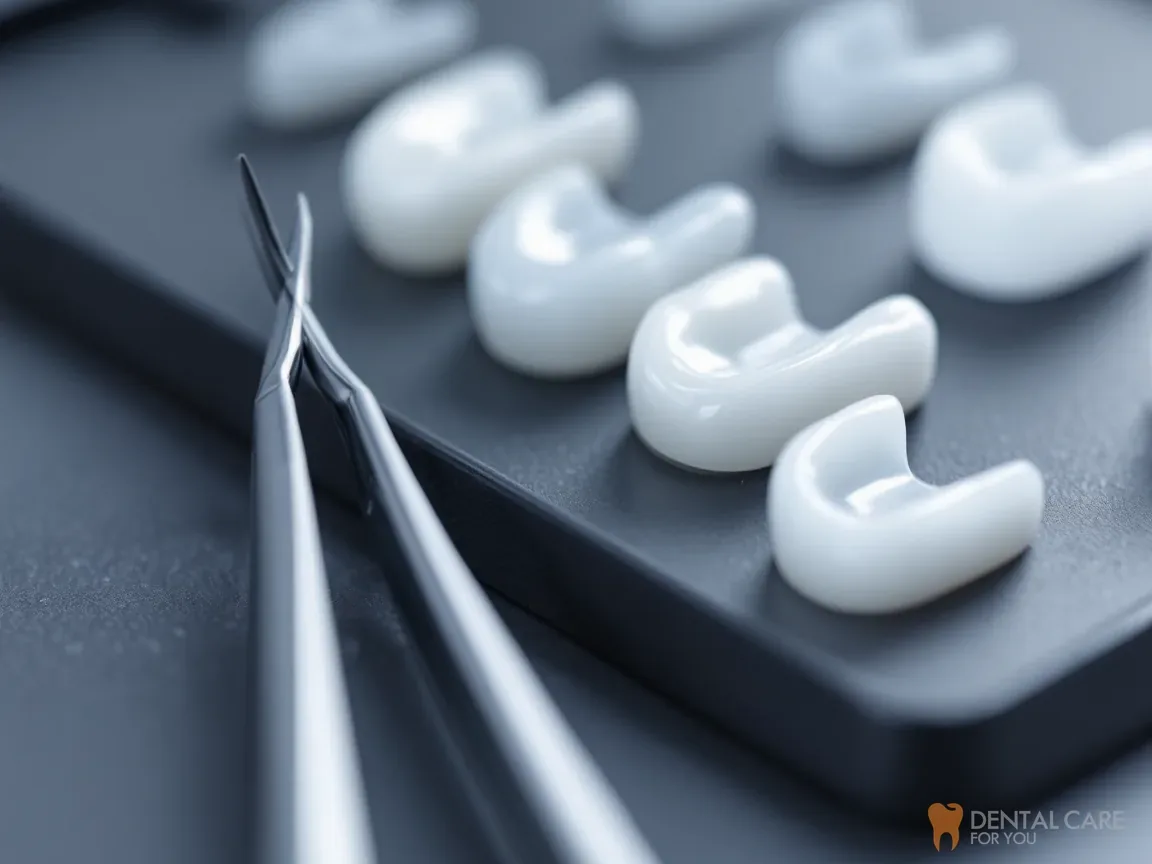
A veneer is a thin layer of tooth-coloured material that covers the front surface of a tooth. It is bonded in place with a strong dental adhesive. Because it covers only the front and sometimes the biting edge, it is less invasive than a crown, which covers the whole tooth. Veneers are used mainly on the teeth that show when you smile, usually the upper front six to ten teeth.
Types of veneers
Porcelain veneers
Porcelain veneers are made in a dental laboratory from a scan or impression of your prepared teeth. Porcelain reflects light in a way that looks very similar to natural enamel, and it resists staining from coffee, tea and red wine. Porcelain veneers can last many years with good care. To make room for the porcelain and keep the teeth from looking bulky, a thin layer of enamel, often less than a millimetre, is usually removed. That enamel does not grow back, so a tooth that has been prepared will always need a veneer or crown afterwards.
Composite resin veneers
Composite veneers are built up directly on the teeth by the dentist, layer by layer, using the same tooth-coloured material as white fillings. They often need little or no enamel removed and can usually be completed in one visit. Composite is easier to repair than porcelain, but it is more likely to stain and chip over time, and it usually needs polishing or touching up more often.
Minimal-preparation veneers
In some cases, very thin porcelain veneers can be placed with little or no enamel removed, for example on small or worn teeth that need building out. Whether this is possible depends on the shape and position of your teeth.
What veneers can and cannot do
Veneers can help with:
- Stains that do not respond to whitening, such as grey banding or a tooth darkened after a root canal.
- Chipped, worn or uneven front teeth.
- Small gaps between front teeth.
- Teeth that are slightly crooked or small, when orthodontics is not wanted or not needed.
- Old front fillings that have discoloured.
Veneers are not usually the right choice when:
- Teeth have active decay or gum disease. These are treated first.
- There is not enough healthy enamel left to bond to, or the tooth is heavily filled. A crown may be more suitable.
- Teeth are badly crooked or the bite is significantly off. Orthodontic treatment usually gives a better long-term result. Our guide to braces and other alignment options explains these.
- You grind or clench heavily without protection. Grinding can chip or loosen veneers, so a night guard is often part of the plan.
- Only colour is the issue on otherwise healthy teeth. Whitening may be enough, and it removes no tooth structure. Our guide to tooth whitening explains how it works.
Veneers, bonding, crowns or whitening: how they compare
Whitening changes the colour of natural teeth without removing any structure. It does not change shape and does not affect existing fillings or crowns.
Bonding uses composite resin to repair a chip or reshape part of a tooth, usually in one visit. It is conservative but more prone to staining than porcelain.
Porcelain veneers change colour and shape together and resist staining, but usually involve removing some enamel.
Crowns cover the entire tooth and are used when a tooth is weak, heavily filled or cracked. They remove more tooth structure than a veneer.
The right choice depends on the condition of each tooth, your bite, your habits and what you want to change. Sometimes a combination works well, for example whitening the back teeth and placing veneers on a few front teeth to match.
What treatment involves, step by step
- Consultation and exam. The dentist checks the health of your teeth and gums, looks at your bite and any signs of grinding, and takes X-rays and photographs. You talk about what you would like to change.
- Planning the new shape. Models or digital scans are used to plan the length, width and shape of the new teeth. Often a mock-up can be placed over your teeth so you can see the proposed shape in your own mouth before anything is changed.
- Choosing the shade. If you want whiter teeth overall, whitening is usually done first so the veneers can be matched to the new shade.
- Preparing the teeth. For porcelain veneers, the area is numbed and a thin layer of enamel is removed. A scan or impression is taken and sent to the laboratory.
- Temporary veneers. Temporary coverings protect the teeth and let you try the shape while the porcelain is made, usually over a couple of weeks.
- Bonding. The fit and colour are checked, the teeth are cleaned and conditioned, and each veneer is bonded in place and set with a curing light. Excess material is removed and the bite is checked.
- Review. A follow-up visit checks the gums and the bite once everything has settled. A night guard may be made if you grind.
Composite veneers skip the laboratory step: the material is shaped directly on the teeth and polished, usually in one longer appointment.
Living with veneers
Veneers are cared for much like natural teeth:
- Brush twice a day with a soft brush and a non-abrasive fluoride toothpaste.
- Clean between your teeth every day. The edges of veneers, where they meet the gum, need the same attention as natural teeth.
- Keep up with regular check-ups and cleanings so the edges and gums can be checked.
- Wear a night guard if one has been made for you.
- Wear a mouthguard for contact sports.
The tooth underneath a veneer can still decay at the edges, and gums can still recede over time, which may make an edge visible. These are reasons for regular checks, not reasons for worry.
What to avoid
- Biting hard objects. Ice, pens, fingernails, hard candy and opening packages with your teeth can chip porcelain or composite.
- Using your front teeth to tear tough food. Cut crusty bread and tough meat into smaller pieces and chew with the back teeth.
- Abrasive whitening pastes and powders. These can dull the polish on composite and the glaze on porcelain.
- Grinding without protection. If you clench or grind, especially at night, a guard protects your investment and your natural teeth.
- Choosing a shade that is too bright. A shade that suits your skin and the whites of your eyes usually looks more natural over the years than the brightest option.
- Deciding in a hurry. Porcelain veneers usually involve permanent changes to the teeth. Take time to understand the plan, the alternatives and the long-term care.
If a veneer chips, loosens or comes off
Even well-made veneers can occasionally have a problem, usually after biting something hard or after years of wear. Knowing what to do keeps a small issue small.
- A small chip on composite. Composite can usually be repaired by adding new material and polishing it, often in one short visit.
- A chip on porcelain. A tiny chip at the edge can sometimes be smoothed or repaired with composite. A larger break usually means making a new veneer.
- A veneer that feels loose. Book a visit soon. A loose veneer can let bacteria in underneath, and it is easier to re-bond before it comes off completely.
- A veneer that has come off. Keep it dry in a small container and bring it with you. Avoid chewing on that side, and do not try to glue it back yourself with household glue.
- Sensitivity under a veneer. New sensitivity months or years later can mean decay at the edge or a change in the gum. It is worth checking.
Veneers over the years
Teeth and gums change with age, and veneers do not. Gums can recede slightly, which may show a thin line where the veneer meets the tooth. Natural teeth next to veneers can darken a little over time, while porcelain keeps its shade. None of this is a failure; it is part of planning for the long term. Regular check-ups let the dentist watch the edges, polish composite when it dulls, and plan any replacement well before a problem appears. Many people with veneers find that a night guard, a soft brush and a non-abrasive paste are the three habits that matter most.
Questions to ask before deciding
- Which of my teeth would need veneers, and why?
- How much enamel would be removed, if any?
- Would whitening, bonding or orthodontics achieve what I want instead?
- Can I see a mock-up of the new shape before anything is changed?
- How will my bite and any grinding be managed?
- What upkeep will the veneers need, and what happens if one chips?
- What affects the cost, and how might my insurance apply? We explain this in writing after the exam.
Bring photos of smiles you like, and of your own smile from a few years ago if your teeth have changed. They help the dentist understand what you are hoping for and plan a shape that suits you.
When to see a dentist
Book a visit if you are considering veneers, if a veneer feels rough, loose or chipped, if the gum around a veneer is sore or bleeding, or if you notice a dark line at the edge of a veneer. Call promptly if a veneer comes off completely: keep it in a clean container and bring it with you, as it can often be re-bonded. Our cosmetic dentistry page explains how we plan smile changes, and our same-day emergency care page explains how to reach us quickly.
Questions about veneers
Do veneers ruin your natural teeth?
Porcelain veneers usually involve removing a thin layer of enamel, which is permanent. The tooth underneath stays healthy with good care, but it will always need a covering. Composite and minimal-preparation veneers remove little or no enamel.
How long do veneers last?
It varies with the material, your bite and your habits. Porcelain generally lasts longer than composite. Grinding, biting hard objects and gum recession shorten their life. Regular check-ups help spot problems early.
Can veneers be whitened?
No. Porcelain and composite do not respond to whitening gel. If you want your natural teeth whiter, whiten before veneers are matched.
Does getting veneers hurt?
The teeth are numbed when enamel is removed. Some people notice mild sensitivity for a few days afterwards, which usually settles.
Can I get just one veneer?
Yes. Matching a single veneer to the teeth beside it takes careful shade work, but it is often done, for example on a darkened front tooth.
Will veneers look fake?
Well-planned veneers are shaped and shaded to suit your face and your other teeth. A mock-up before treatment helps you see and adjust the result.
Can I have veneers if I grind my teeth?
Often yes, with a night guard and a careful look at your bite. Heavy grinding without protection is one of the main reasons veneers chip.
Related guides
Curious whether veneers suit you? Call Dental Care For You at (647) 350-4500 or send us a message. We will look at your teeth, explain every option and give you time to decide.
About this guide
Prepared by the team at Dental Care For You, 3520 Danforth Ave, Unit 107, Scarborough, ON M1L 1E5. Phone (647) 350-4500.